
45 Bends
Bends is a 6-stage stereo multi-effects processor, live stutter looper, and signal degradation engine. Inspired by 90s circuit-bent rack units, Bends turns memory corruption, bitwise XOR data bus shorting, and lossy compression into an instrument spanning clean stereo chorus and reverbs to mangled breakbeat slicing, internal Turing Machine pitch sequences, and generative S&H CV.
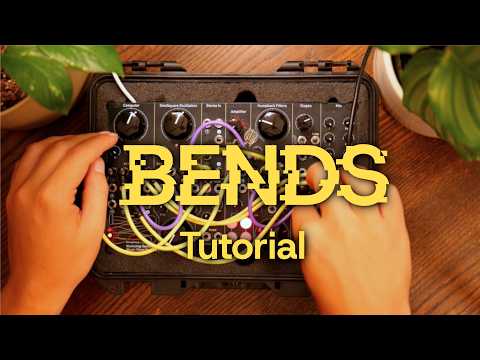
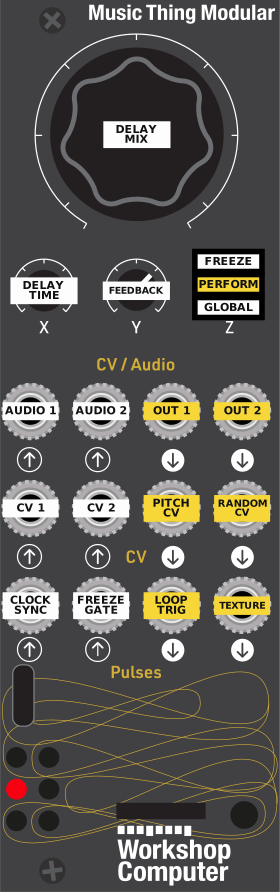
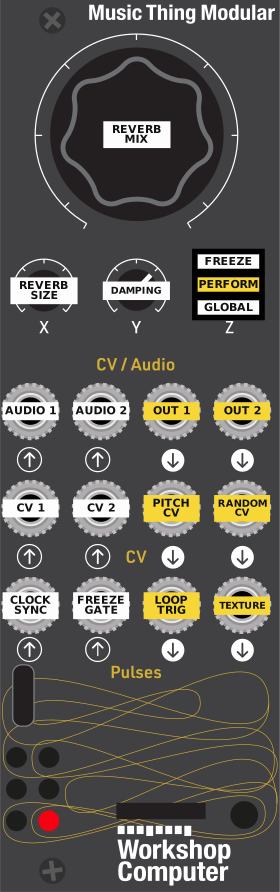
Panel
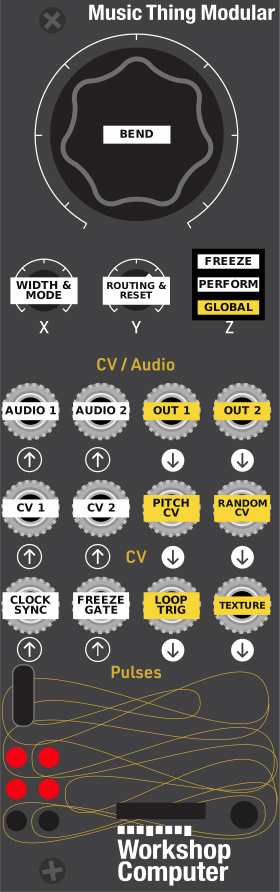
Global Overview & Signal Routing
Bends is a 6-stage stereo multi-effects processor, live stutter looper, and signal degradation engine designed for the Workshop Computer.
The module makes digital imperfection its core concept. Inspired by 90s circuit-bent rack units, Bends exposes the artifacts, memory corruption, and data bus shorting of early digital processors. It functions both as a traditional stereo multi-effects unit and as a self-contained generative sound source.
Bends spans a wide range of sound processing:
- Clean stereo utility: BBD chorus, pitch-glide delays, state-variable filters, and spring or hall reverbs.
- Glitch textures: Granular freeze pendulums, clock-synced breakbeat slicing, and shimmer pitch-shifting.
- Digital corruption: Wavefolder fuzz, bitwise BBD XOR data bus shorting, lossy MP3 compression, network packet dropouts, and CD sputter.
Switch Controls & Navigation
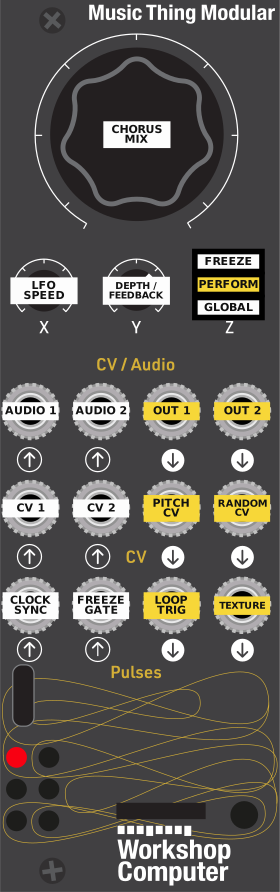
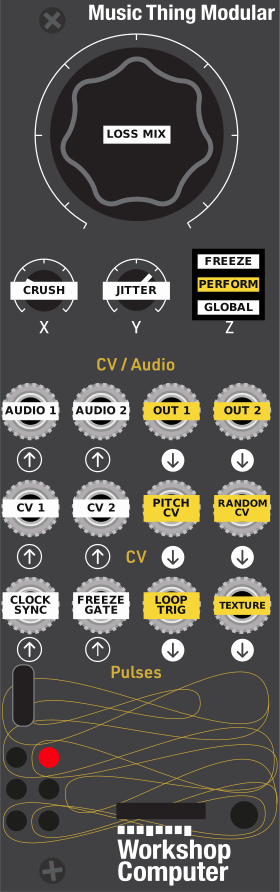
- **Tap DOWN (<350ms)**: Step forward through parameter pages (
1. Chorus->2. Loss->3. Delay->4. Glitcher->5. Filter->6. Reverb). - Hold DOWN (>=350ms): Enter Global Mode to adjust global bend, stereo width, and routing presets.
- Hold DOWN (3s): Save current parameters and routing setup to persistent flash memory (600ms strobe confirmation).
- Flick UP: Toggle live buffer Freeze Mode.
Global Controls (Global Mode)
- Main (Bend): Sweeps background noise, vinyl crackle, bitcrush fuzz, and packet dropouts across all 6 effect stages simultaneously.
- X (Width & Mode): Extended Mono Mode (CCW limit <2%), Stereo Width (0% to 100%), or Dual Mono Mode (CW limit >95%).
- Y (Routing & Reset): Selects 1 of 4 signal routing chains (
0: Series FX,1: Space Wash,2: Granular Cloud,3: Filtered Dub). Turn fully CW (>96%) to Clean Reset.
Mode LED Indicators
- LEDs 0 to 3: Active signal routing chain (0 to 3).
- LED 4: Dual Mono Mode active.
- LED 5: Extended Mono Mode active.
Inputs
- Audio 1 & 2: Stereo audio inputs. When no cable is inserted in Audio 2, Audio 1 is normalled to both channels to maintain stereo processing.
- CV 1: Bipolar CV input modulating primary page parameters or tuned 1V/Oct pitch in Karplus-Strong string and filter oscillator modes.
- CV 2: Bipolar CV input modulating secondary page parameters, digital corruption, and stutter loop capture.
- Clock Sync (
Pulse 1): Multi-standard pulse clock sync (1, 2, 4, and 24 PPQN DIN Sync) for delay subdivisions, loop stepping, and pitch CV sequence advances. - Freeze Gate (
Pulse 2): High gate input (>+1.2V) locking delay and stutter buffers into live freeze.
Outputs
- Out 1 & 2: Processed stereo audio outputs with DC-blocking filters.
- Pitch CV (
CV Out 1): Turing Machine 1V/Oct quantized semitone CV sequence output driven by internal shift register. - Random CV (
CV Out 2): Stepped random Sample & Hold CV output updated per clock step or loop reset, designed for self-modulation. - Loop Trig (
Pulse Out 1): +5V 2ms trigger pulse output emitted on granular loop resets or clock steps. - Texture (
Pulse Out 2): Lo-fi PWM audio stream output of microsound bleeps, vinyl crackle, and sub-harmonic loop ticks.
Reset Procedures
- Preset Clean Reset: Turn Knob Y fully CW (>96%) in Global Mode to restore all 6 parameter pages to clean factory defaults.
- Factory Hardware Reset: Power on system while holding Z Switch DOWN (1s LED flash) to restore original factory settings from flash memory.
README
Bends
6-Stage Stereo Multi-FX, Glitch Looper & Digital Degradation Engine
Overview
Bends is a 6-stage stereo multi-effects processor, live stutter looper, and signal degradation engine designed for the Workshop Computer.
The module makes digital imperfection its core concept. Inspired by 90s circuit-bent rack units, Bends exposes the artifacts, memory corruption, and data bus shorting of early digital processors. It functions both as a traditional stereo multi-effects unit and as a self-contained generative sound source.
Bends spans a wide range of sound processing:
- Clean stereo utility: BBD chorus, pitch-glide delays, state-variable filters, and spring or hall reverbs.
- Glitch textures: Granular freeze pendulums, clock-synced breakbeat slicing, and shimmer pitch-shifting.
- Digital corruption: Wavefolder fuzz, bitwise BBD XOR data bus shorting, lossy MP3 compression, network packet dropouts, and CD sputter.
Navigation & Switch Modes
The Z toggle switch controls module state:
| Gesture | Mode | Function |
|---|---|---|
| Tap DOWN (<350ms) | Page Step | Advances through pages: 1. Chorus -> 2. Loss -> 3. Delay -> 4. Glitcher -> 5. Filter -> 6. Reverb. |
| Hold DOWN (>=350ms) | Global Mode | Adjusts global bend, stereo width, and routing presets. |
| Hold DOWN (3s) | Save Preset | Saves current settings to flash memory (600ms strobe confirmation). |
| Flick UP | Freeze Mode | Locks recording memory into live granular freeze. |
Program Pages
- 1. Chorus / Tape Loss: Stereo BBD chorus, tape drift, Karplus-Strong string synthesis (Y > 68%), and bitwise XOR distortion (Y > 96%).
- 2. Loss Engine: Morphs across Tape Drive, MP3 Ringing, Bitcrush Fuzz, Decimation, Tape Wow/Flutter, Packet Dropouts, and CD Sputter.
- 3. Multi-Tap Delay: 16 rhythmic clock subdivisions and feedback XOR overdrive (>70%).
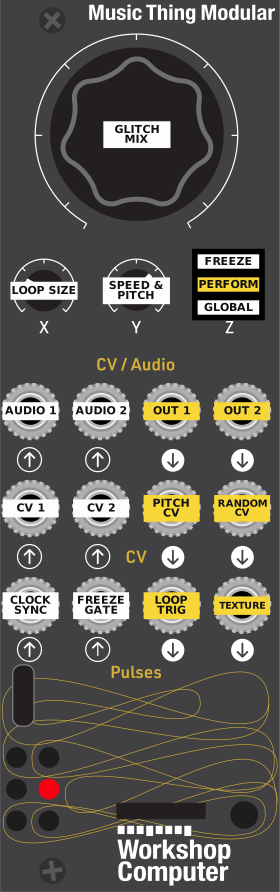
- 4. Glitcher: Granular stutter looper with tempo-synced slice sizes, playback speed (-1.0x to +2.0x), and pitch mutation.
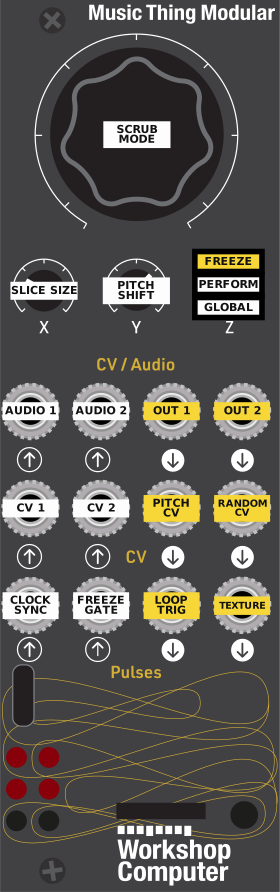
- Freeze Mode (Switch UP): Playhead scrubbing (Auto LFO, Manual, or Random Skip) over locked RAM buffer.
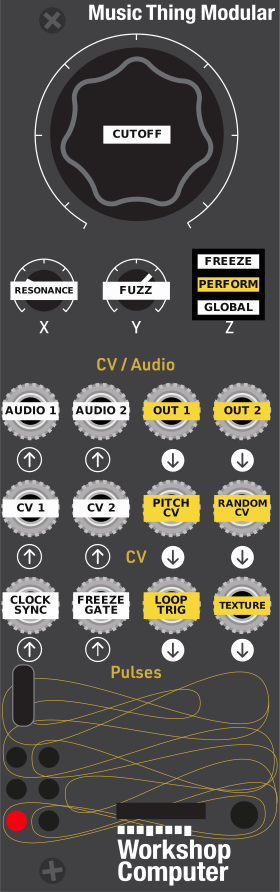
- 5. Resonant Filter: State-variable filter (Lowpass to Highpass) with self-oscillation (>75%) and wavefolder drive fuzz.
- 6. Reverb Engine: Dual spring and hall reverb with damping, shimmer pitch-shifting (>73%), and circuit jitter (>82%).
Suggested Patches
- Standalone Glitch Drum Machine: Unplug all audio inputs. Self-patch
Random CV(CV Out 2) intoCV 1to self-modulate pitch and Karplus-Strong string plucks, add delay on Page 3, and freeze the buffer. - Karplus-Strong String Sequencer: On Page 1, set Y > 68%. Patch an external clock into
Clock Sync(Pulse 1) to pluck the string whilePitch CV(CV Out 1) outputs a 1V/Oct Turing Machine sequence. - Clock-Synced Beat Slicing: Send a clock into
Clock Sync(Pulse 1). Delay repeats and looper slice sizes automatically snap to rhythmic subdivisions. - Live Freeze Scrubbing: Flick Z switch UP to freeze live audio. Use Main knob to scrub through the buffer or set to Random Skip on clock pulses while Filter and Reverb continue processing.
- Contact Mic Soundscapes: Plug a contact mic into
Audio 1, tap physical objects, and process through Loss, Delay, and Reverb to generate ambient textures.
Reset Procedures
- Preset Clean Reset: In Global mode (Z Switch DOWN >=350ms), turn Knob Y fully clockwise (>96%) to restore clean defaults across all 6 pages.
- Factory Hardware Reset: Power on system while holding Z Switch DOWN (1s LED flash) to restore original factory settings.